

As a nerd, I immediately signed up when I stumbled upon the Liquid AI x DPhi Space virtual hackathon “AI in Space”, a four-week challenge that started in April. Unfortunately, life kept me busy and I only managed to stitch something together in the last two hours before the submission deadline.
The problem
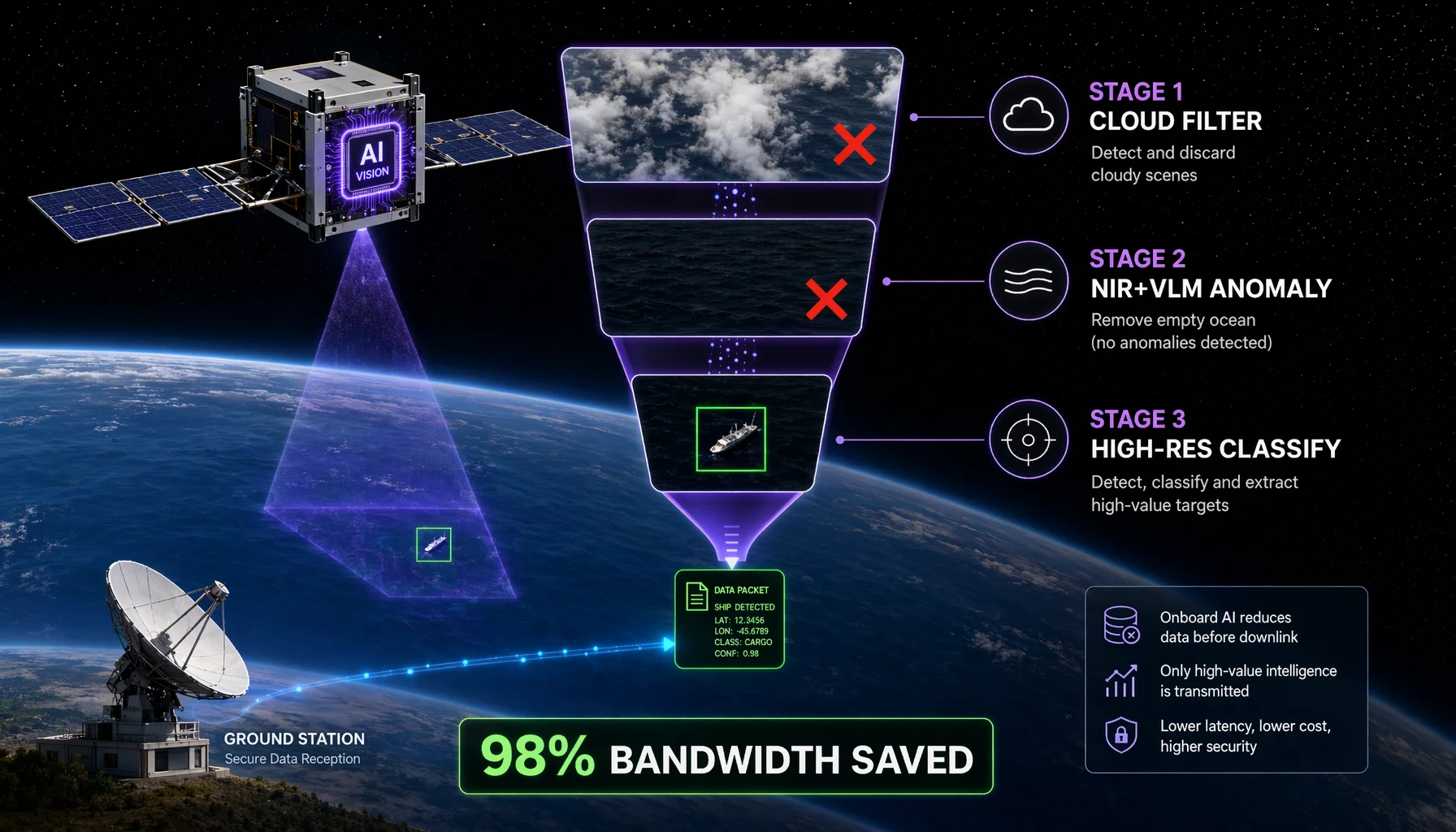
I am by no means a domain expert, but from my understanding, satellites are heavily constrained when it comes to downlink: only a few passes per day, short contact windows with limited bandwidth. That makes Edge AI and efficient data transmission a thing.
The submission
My submission was an on-board satellite AI pipeline for dark vessel detection, called CODA-DVD: Cascaded On-Board Attention for Dark Vessel Detection. Dark vessels are ships that turn off or don’t carry AIS and therefore disappear from maritime tracking systems. This could be for many reasons like illegal fishing, sanctions evasion, smuggling, dumping or piracy.
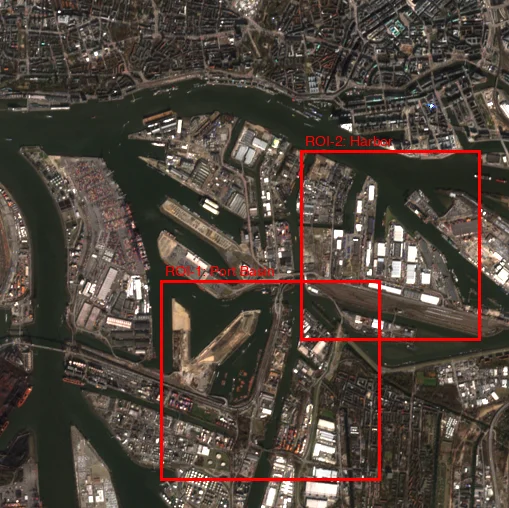
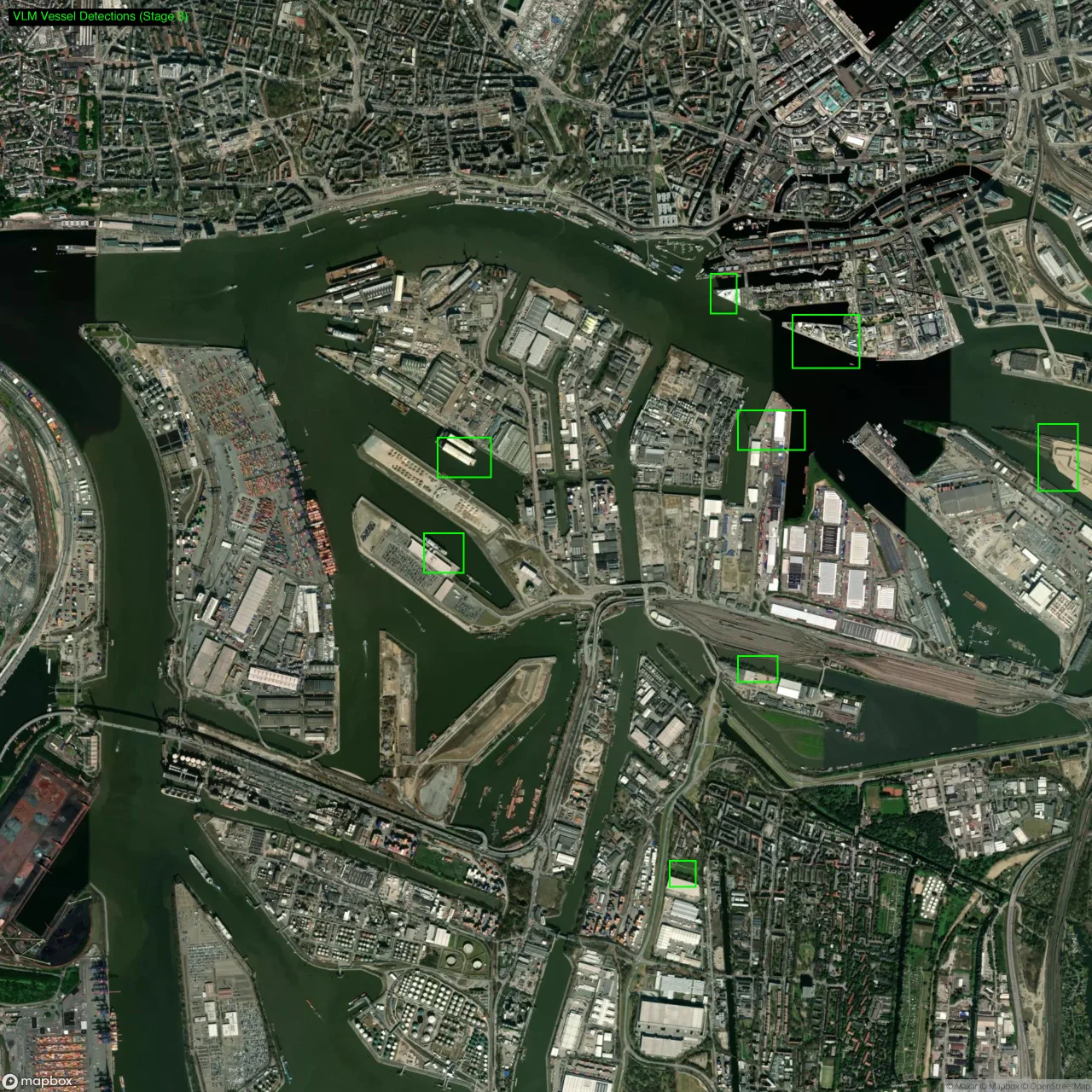
The implemented pipeline first filters out images with too many clouds or just empty ocean, which already cuts downlink bandwidth by 98%. It then uses Liquid AI’s LFM2.5-VL 1.6B as the decision engine: first to check NIR anomalies detected with Sentinel-2 Copernicus thresholding and then to classify vessels in high-res imagery e.g. from Mapbox. The quantized model is 2.6 GB, so it still fits reasonably well on edge.
Fine-tuning
I also fine-tuned the model on VRSBench, a remote-sensing grounding dataset from NeurIPS 2024, on an H100, thanks to Modal’s $30 free sign-up credits.
Result
In the end, the pipeline worked as intended, especially given the time limit but I’m not quite happy yet with accuracy of the fine-tuned model. The training data was probably too little and not specific enough for really strong results, but it was a fun project and I can imagine there are many more interesting use cases.
Thanks to Liquid AI and DPhi Space for the experience!